

ONE NATION ONE ELECTION


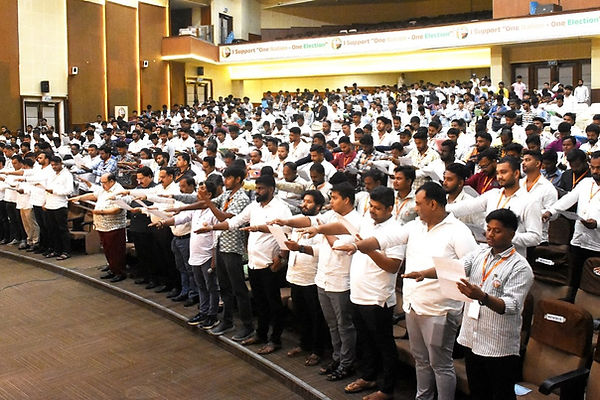
From 1951–52 to 1967, elections to the House of the People (Lok Sabha) and the Legislative Assemblies of States were conducted simultaneously, ensuring administrative efficiency and political stability. However, this synchronized cycle was disrupted thereafter, resulting in a situation where elections are now held almost every year, and often multiple times within the same year, across different States.
This fragmented electoral calendar has led to several challenges — massive expenditure incurred by the Government and other stakeholders, diversion of security forces and administrative machinery from their core responsibilities over prolonged periods, and repeated interruptions in developmental activities due to the frequent enforcement of the Model Code of Conduct. Such disruptions ultimately slow down the pace of governance and policy implementation.
The Law Commission of India, in its 170th Report on Reforms of the Electoral Laws, had rightly observed that this continuous cycle of elections must end. The Commission recommended a return to the earlier system where elections to the Lok Sabha and all State Assemblies are held simultaneously once every five years. It recognized that while certain unforeseen situations may arise — whether due to Article 356 or other constitutional contingencies — separate elections should remain the exception, not the norm.
Similarly, the Department-related Parliamentary Standing Committee on Personnel, Public Grievances, Law and Justice, in its 79th Report (December 2015), examined the feasibility of holding simultaneous elections and proposed a practical, phased approach to implement the same.
In view of these recommendations and the larger national interest, it is both timely and prudent to seriously consider the idea of One Nation, One Election. The Government of India, acknowledging the long-term benefits of synchronized elections, has accordingly constituted a High-Level Committee (HLC) to study this issue comprehensively and to make actionable recommendations for holding simultaneous elections across the country.
As a Member of Parliament, I firmly believe that synchronized elections will not only reduce costs and administrative burdens but also strengthen democratic stability, promote policy continuity, and ensure that governance remains the primary focus throughout the term of the elected government.